Portable EV Chargers vs. Dedicated Home Smart Chargers: Cost, Safety & Charging Speeds Compared

When taking delivery of a new electric vehicle, many drivers rely on the standard emergency 3-pin cable supplied in the boot. While a portable ev charger for car use offers flexibility in a pinch, relying on it as your primary daily charging method presents significant risks to charging speeds, structural safety, and long-term domestic wiring health.
Understanding the technical differences between portable trickle charging, commando socket setups, and dedicated smart home chargers ensures your property remains safe and fully compliant with UK wiring regulations
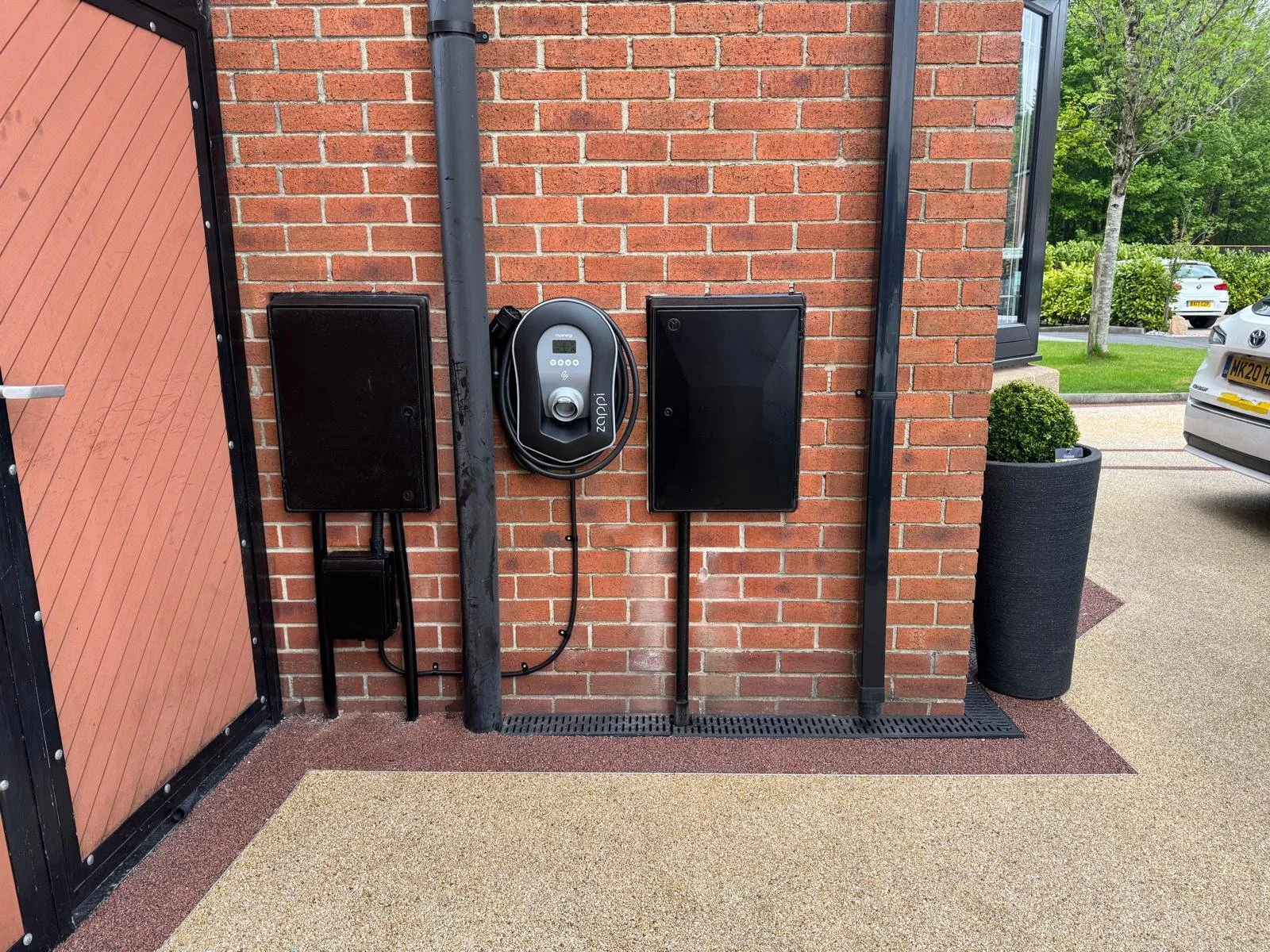
The Myth of 3-Pin Trickle Charging: Overheating Risks
Standard UK 13-Amp domestic sockets were engineered for intermittent household appliances, not for continuous, heavy electrical draw spanning 8 to 14 hours straight.
When using the best portable ev charger on a regular 3-pin plug, drawing a continuous $10\text{ A}$ to $13\text{ A}$ current generates sustained thermal stress. Over prolonged cycles, this continuous load degrades internal copper contacts, warps plastic faceplates, and severely elevates the risk of localized arcing and structural electrical fires.
Charging Speed Analysis: $2.3\text{ kW}$ vs. $7.4\text{ kW}$
The performance discrepancy between portable cables and dedicated wallbox chargers fundamentally alters your daily driving experience:
3-Pin Portable Trickle Charging ($2.3\text{ kW}$): Delivers roughly 8 to 10 miles of range per hour of charge. Replenishing a standard $60\text{ kWh}$ battery pack from empty to $100\%$ requires over 26 continuous hours on the grid.
Industrial Commando Socket EV Charging ($3.6\text{ kW}$ to $7.4\text{ kW}$): While a commando socket ev charging setup using an industrial blue CEE socket offers higher continuous amp capability than a 3-pin plug, it still lacks built-in smart-grid load balancing and tariff automation.
Dedicated Smart Home Charger ($7.4\text{ kW}$): Operating on a dedicated single-phase circuit, a $7.4\text{ kW}$ smart wallbox adds approximately 25 to 30 miles of range per hour. It fully charges a $60\text{ kWh}$ vehicle overnight in under 8 hours while automatically scheduling charging during off-peak energy tariff windows.
Safety & BS 7671 Regulations: Earthing & PEN Fault Protection
Under the 18th Edition of the IET Wiring Regulations (BS 7671:2018+A2:2022), EV charger installations must adhere to strict protective measures
Protective Earth Neutral (PEN) Fault Protection: Portable charging cables connected to standard sockets cannot detect a broken neutral wire on the incoming supply grid. In the event of a PEN fault, the vehicle's metallic chassis can become live at $230\text{ V}$, creating a fatal shock hazard. Dedicated smart chargers feature internal PEN fault detection hardware that automatically isolates the vehicle without requiring costly external earth rods.
Surge Protection Devices (SPDs): Both dedicated wallboxes and high-draw commando circuits require dedicated SPD protection at the consumer unit to safeguard delicate vehicle electronics from voltage spikes.
Claim Your £500 Grant with Saim Volt
Instead of risking thermal degradation or slow charging speeds with a basic portable ev charger uk setup, upgrade your property with an accredited installation. As official government-authorized installers operating under Saim Electrical Engineering Ltd, our Saim Volt division manages your complete infrastructure transformation—from initial load-balancing checks to mandatory Distribution Network Operator (DNO) grid notifications
If you are a flat owner, renter, or landlord updating a rental portfolio, you can claim up to £500 off your installation through the official OZEV chargepoint grant.
Explore our specialized
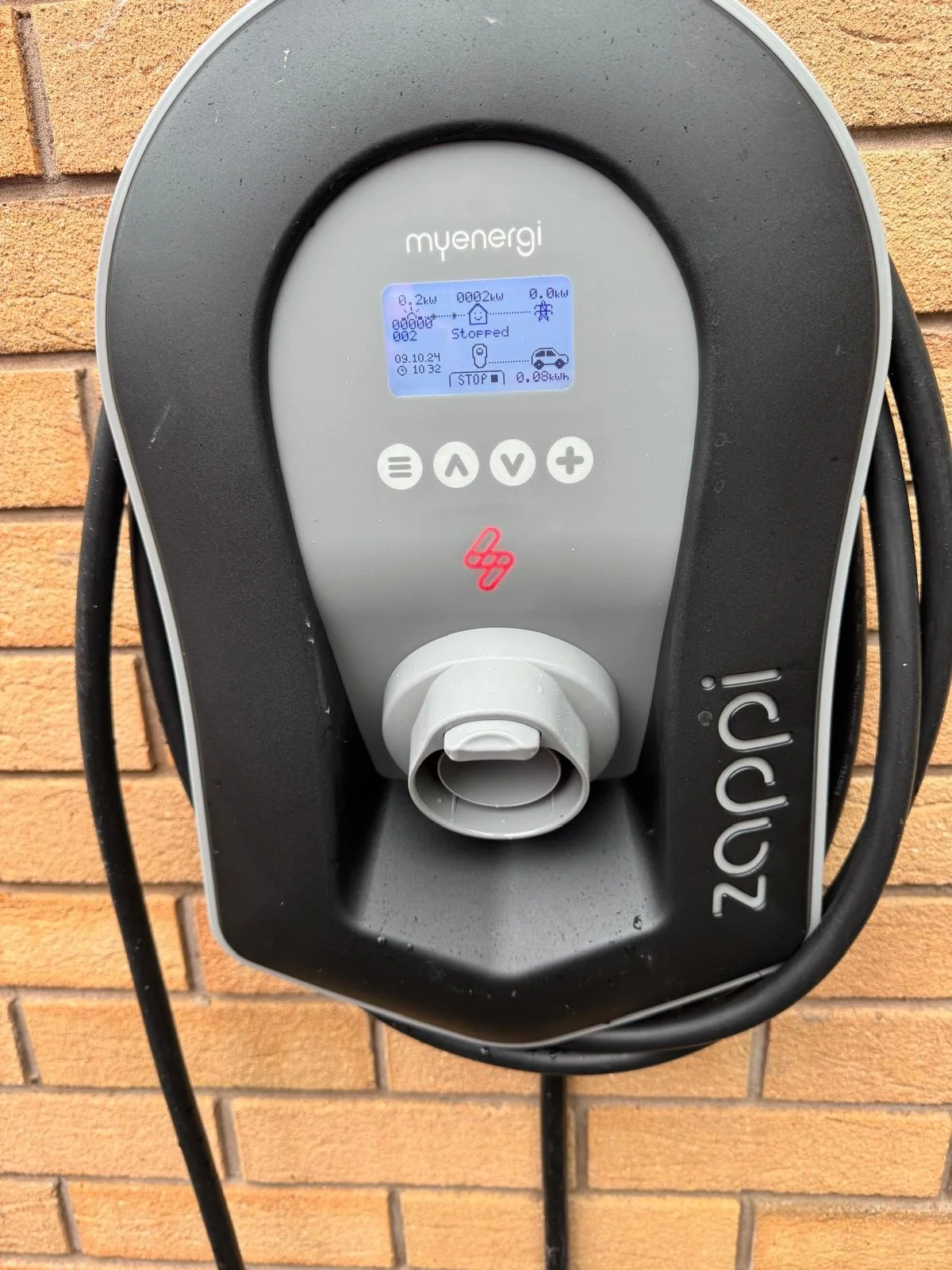

.jpeg)
Comments
Post a Comment